Posts

Showing posts with the label City of Sanibel

Scott and Mike for City Council

On March 2, or sooner for those who order mail-in ballots , Sanibel citizens will be able to vote for three new city council members.  Out of the field of six candidates, I know who I will get my vote for two of those positions.  For the third position, I haven’t yet decided. In an outstanding field of candidates, these two really stand out for me:   Mike Miller and Scott Crater.   Both have the kind of expertise and leadership qualities that we need in this somewhat difficult time.   I endorse Mike Miller and Scott Crater for the city council. For the City of Sanibel, there will be economic fallout from the pandemic for some time to come.   The City also needs to continue to take measures to protect against the spread of the virus, as the vaccine rollout is slowed by lack of supply.   We also continue to experience water quality problems due to releases from Lake Okeechobee and the Caloosahatchee watershed.   To deal with all of this, we need...
Sanibel Voters Must Meet the Challenge: Keep Sanibel Special

Image
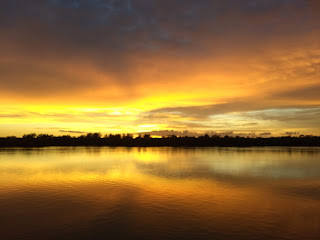
Sunset at Sunset Bay, Sanibel Sanibel voters will be electing three new city council members in March.  Since there are only five members of council, this will be the majority of members – newly elected.  That is a rare occurrence, and it is a great opportunity for residents to ensure that their interests will be represented on council.  Rumors abound about who may be running for election to these positions.  At least it seems that this time candidates will probably not be running unopposed, as has happened at times in the past. The Sanibel Plan , the document that has guided us in ensuring that Sanibel remains special, states clearly by way of background for the Sanibel Vision Statement that we have a challenge before us: “The specter of rampant development has diminished as the community has matured. Nevertheless, unwanted changes are occurring; visitation increases as new ‘attractions’ are developed; beaches and refuge areas are becoming stressed by overuse; tra...

The Plan

Image
Sanibel Island has about 18.1 square miles of land – similar in size to Manhattan, which has 22.8 square miles.  Two-thirds of Sanibel’s land is designated as conservation land, owned by the City of Sanibel, the Sanibel-Captiva Conservation Foundation, the Federal government, or the State of Florida. The island’s biggest landowner and land manager is the Federal government, with 8 of those 18 square miles.   The land use of the remaining 10 square miles is strictly regulated by the City of Sanibel.   The guiding document for that control of land use and development is Sanibel’s Comprehensive Land Use Plan, better known simply as the Sanibel Plan. Sunrise on Dinkins Bayou, on Sanibel Island (photo by Barbara Joy Cooley) From its beginning in 1976 [1] , the Sanibel Plan has recognized that “unlimited future population growth would be hazardous to health, safety, and welfare of the public.”   The plan also notes that restriction of development is needed for “adequat...

Ban the Plastic Straw

Image
Published in local newspapers June 2018 -- In early February, the News-Press published an article about the remarkable news that Fort Myers Beach now has a ban on plastic drinking straws.   I thought to myself, “If Fort Myers Beach can do this, then Sanibel certainly can!”    After reading the newspaper, I went for my morning walk.   On that walk I saw my neighbor, city council member Jason Maughan, and asked him what he thought of the idea.   He was positive.   We talked about how many more straws were probably on Fort Myers Beach because of all the commercial enterprises there.   But there are some near-beach establishments where plastic straws are routinely used on Sanibel. The first person I ever heard talk about the environmental threats posed by plastic drinking straws was Carolyn Raffensperger, our keynote speaker at the Committee of the Islands (COTI) annual meeting in 2011.   Several COTI board members took Carolyn out to lunc...

Guilty: The Grand Floridian

Image
Florida lagoons, ponds, and lakes should be surrounded by native vegetation. June 16, 2016 -- I used to write newspaper articles about alligators on Sanibel Island.  More specifically, I wrote about incidents involving alligators, as recorded in police reports.  My goal was to explain that complaining to the police about an alligator's presence was a death sentence to the alligator, especially if it is over 6 feet long.  Those reported alligators are killed; the smaller ones are relocated.  I stopped writing those articles when I began to suspect that they were reminding some people that they could get rid of any alligator by simply calling the police. Alligator eating a bowfin fish behind our former home. Indeed, alligators who show no fear of humans are dangerous.  But most alligators are not dangerous to humans, because they fear and avoid them.  What makes alligators lose that fear?  People who feed alligators, that's what.  Almost a...

The Good Side of Politics

Image
November 12, 2014 --   Five years ago, I was asked to return to a position on the board of directors for the Committee of the Islands (COTI), a non-partisan political committee on Sanibel Island.   Then I was asked to be the president of that organization – a job I held for four years, meeting my term limits.   I’m now in the middle of one last, post-presidential, year on that board. One of the first things I did when I began my time as president was to review the history of the group, doing much research in the archival files at the Sanibel Library.  I wrote an article about the history of COTI, and later I adapted the article for the “history” page of the COTI web site at http://www.coti.org/history.cfm .  Go ahead and read that page if you’re interested in Sanibel.  I’m proud of this organization’s roots in the founding of the City of Sanibel – an act of defiance to protect the fragile barrier island from over-development.  This history ha...

Water World

Image
My friend John Cassani has an editorial/commentary in today's local newspaper, the News-Press .  John is a friend whom I've known for years, but rarely see face-to-face, because we live 50 miles apart.   The first time we met was at a South Florida Water Management District meeting about nine or 10 years ago, I think, when our estuary was being slammed with discharges of polluted water from Lake Okeechobee; harmful algae blooms abounded as a result.  Since then, we both have been and still are part of a group that receive regular emails on the subject of those awful discharges. Our back yard in 2013:  Chowder Pond The subject of John's commentary today is the importance of wetlands in south Florida.  As he explains, "Wetlands are the natural kidneys that filter pollutants from surface runoff. They attenuate flooding and recharge drinking water aquifers, key functions that help protect Florida in more ways than they are generally given credit for. For some,...

The Beginning: Barbara Joy Cooley's Sanibel Journal

Image
I started my Paris Journal 15 summers ago, before the word "blog" had been invented.  From time to time, my readers have asked, "Why don't you write a Sanibel blog?" Today is the day.  Barbara Joy Cooley's Sanibel Journal has begun. My husband (Tom Cooley) and I live in Sanibel.  It is our only home.  But we do go to Paris every summer for three months.  We don't have a home of our own in Paris; we simply rent an apartment from friends. The Paris Journal is not a travel journal; we live in Paris in the summer, but we are not tourists.  My husband and I are writers.  We work at our computers until about 3 or 4PM every day when we're in Paris. Likewise, the Sanibel Journal is not going to be a travel journal.  It is not meant for tourists, but tourists might enjoy it, especially if they're interested in the perspective of the locals. I'm a community activist by nature, and a science writer by education and work experience.  I firs...